

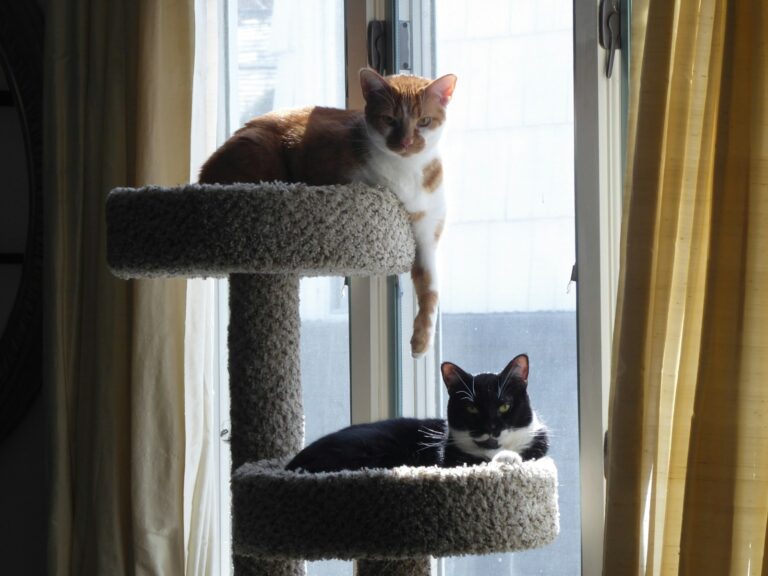
This guide explains how to choose a cat tree that your cat will actually use: the main types, how tall it should be, which scratching surfaces cats prefer, and how to match a tree to kittens, big breeds, seniors and multi-cat homes. The single most important takeaway: a cat tree has to be rock-steady. A tree that wobbles under a landing cat is a tree your cat will learn to avoid.
Key takeaways
- Feline vets treat vertical space as an essential resource for indoor cats, not an optional extra.
- Stability matters more than height, levels or looks. Push the top: if it rocks, it is not safe.
- In a large owner survey, cats most often used sisal rope when it was offered, and posts over 3 feet tall were linked to less furniture scratching.
- Look for at least one continuous scratching surface tall enough for a full stretch, not just a short wrapped band.
- Big cats need wide perches, thick posts and a heavy base; tall trees should be anchored to a wall.
- Senior cats often stop jumping because of arthritis, so lower trees with steps or ramps help them keep using height.
- In multi-cat homes, offer more than one high spot so no cat has to share or get trapped.
In this guide
- Why do cats need a cat tree?
- Types of cat trees and vertical space
- How tall should a cat tree be?
- Stability: the feature that matters most
- Scratching surfaces: sisal, carpet and more
- Perches, beds and hideaways
- Choosing a tree for your cat
- Where should you put a cat tree?
- How to get your cat to use a new tree
- Safety checks and upkeep
- When to call the vet
- How we researched this guide
- Frequently asked questions
Why do cats need a cat tree?
Cats need safe high places to rest, watch and escape, and a cat tree is the easiest way to give them that indoors. The American Association of Feline Practitioners (AAFP) lists safe territory with vertical space alongside food, water and litter boxes as resources an indoor-only cat needs for good welfare.
Cats are both small hunters and possible prey. Being up high lets them watch the room without being reached, which is why so many cats pick the top of the fridge or a bookshelf when nothing better is available. International Cat Care notes that cats are natural climbers and that resting and observing from high places is important to them.
There are practical reasons too. PetMD points out that heat rises, so high spots are often the warmest in the house, and that height lets a cat get away from noise, kids, dogs or other cats. That is part of why your cat may sleep so much in one favorite raised spot.
A good tree also does several jobs at once. It can be a scratching post, a bed, a hiding place and a gym. The Ohio State University Indoor Pet Initiative lists scratching and climbing structures among the basic resources indoor cats need. If you want the bigger picture of keeping an indoor cat busy, see our Indoor Cat Enrichment: The Complete Guide.
Can a cat tree help with stress?
It can be part of the answer. The AAFP and ISFM environmental needs guidelines say that if an indoor cat’s needs are not met, the cat may develop stress-related illness or unwanted behavior. A raised safe place is one of the needs those guidelines describe. A tree will not fix every problem, but a cat with somewhere secure to retreat to has one less thing to worry about.
Types of cat trees and vertical space
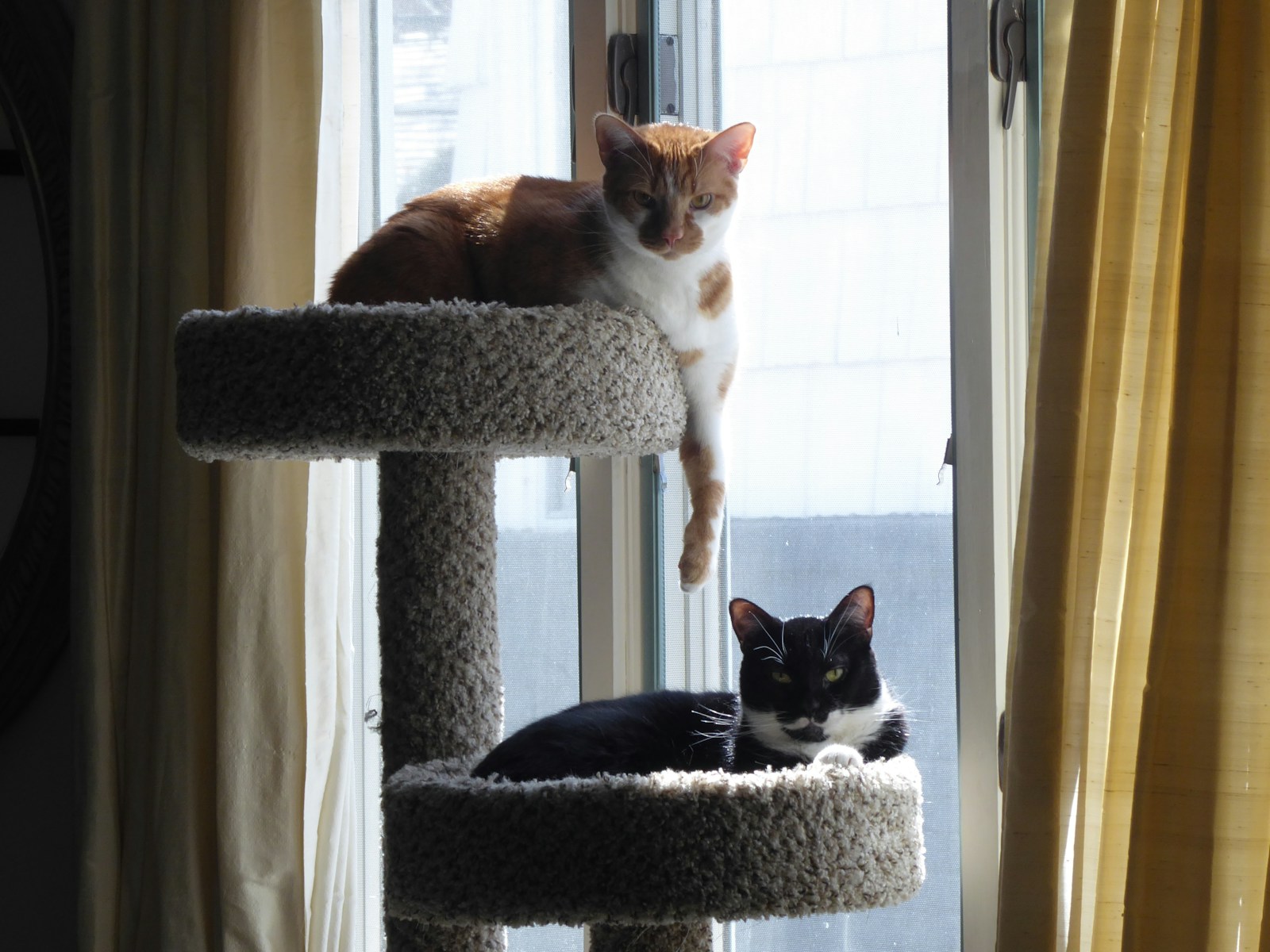
Most “cat trees” fall into five groups: simple posts with a perch, multi-level floor trees, floor-to-ceiling tension towers, wall-mounted shelves, and window perches. Product names are not regulated, so judge a listing by its measurements, not by whether it calls itself a tree, tower or condo.
| Type | What it is | Best for | Watch out for |
|---|---|---|---|
| Post with top perch | One scratching post topped by a small platform | Small spaces, kittens, testing whether your cat likes height | Small perches, light bases that tip |
| Multi-level floor tree | Several posts, platforms, a condo or hammock | Most single-cat and two-cat homes | Short sisal bands, narrow perches, wobble on carpet |
| Floor-to-ceiling tower | A pole held in place by pressure between floor and ceiling | Renters who want height with a small footprint | Needs a solid ceiling and regular re-tightening |
| Wall shelves and walkways | Shelves, bridges and steps fixed to the wall | Multi-cat homes, small rooms, cat “highways” | Must be screwed into studs; harder for older cats |
| Window perch | A ledge or hammock that clips to a sill or sticks to glass | Bird watching and sunbathing | Check the weight rating; keep blind cords away |
Do you even need a store-bought tree?
Not always. The Toronto Humane Society describes vertical space as any safe raised area a cat can climb, perch or rest on, including a cleared shelf or sturdy furniture the cat is allowed to use. A tree is simply the most convenient package because it adds scratching and hiding in the same spot. Many homes end up with a mix: one tree, a window perch and a cleared shelf.
Are wall-mounted systems a good choice?
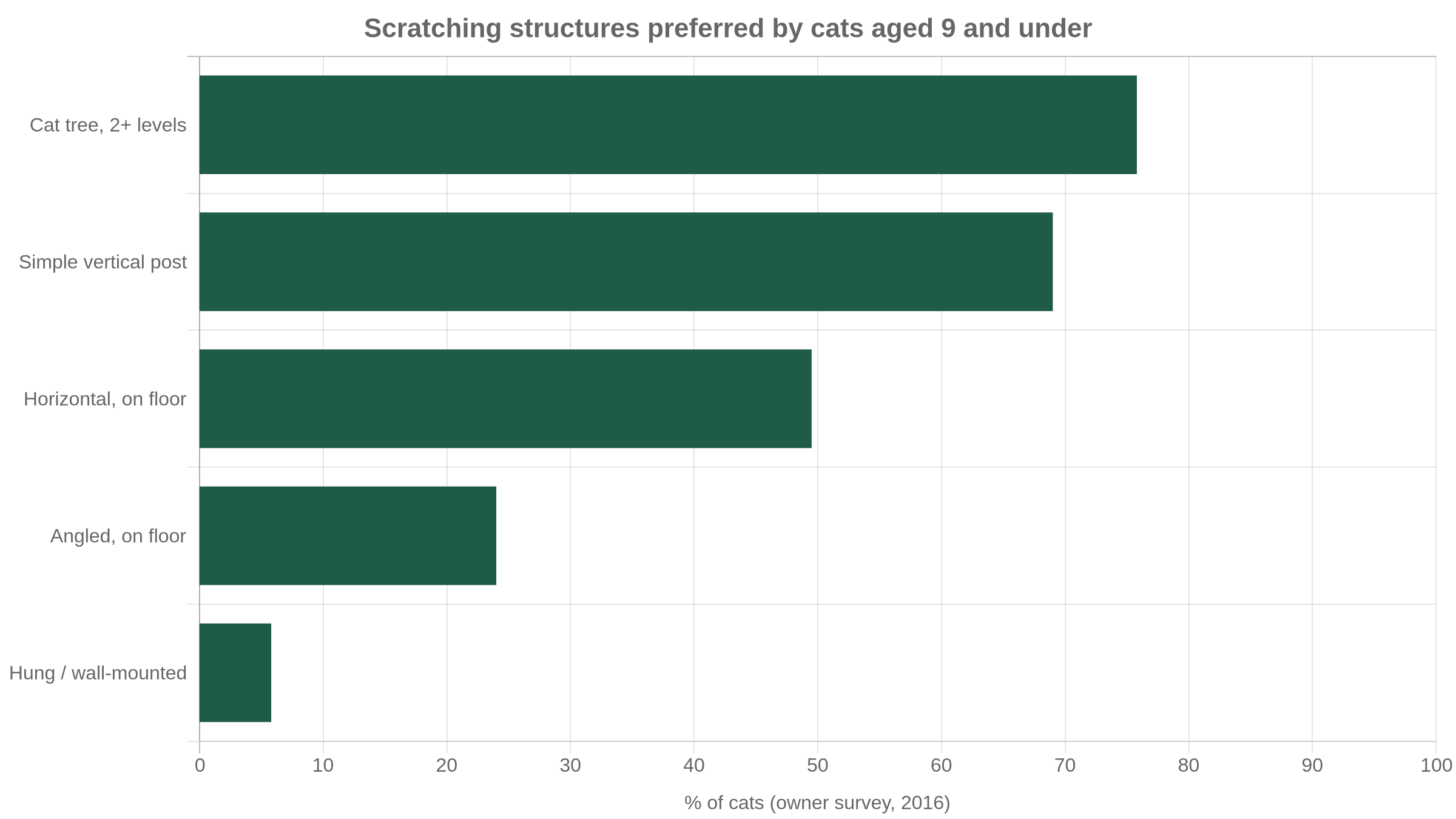
They can be, especially for active cats and homes with little floor space. One caution: in the 2016 owner survey published in the Journal of Feline Medicine and Surgery, hung or wall-mounted scratchers were the least used type and were linked to the most furniture scratching. So if you go with shelves, still offer a sturdy floor-standing scratching post. Our Cat Scratching Posts: The Complete Buying Guide covers posts in detail.
How tall should a cat tree be?
For most healthy adult cats, choose a tree with a top perch above the height of your furniture and a scratching surface over 3 feet long. Very young, very old or less mobile cats do better with a shorter tree and smaller gaps between levels.
The best research on this comes from scratching behavior. In the Journal of Feline Medicine and Surgery survey, which analyzed answers from 4,105 cat owners, cats with posts over 3 feet tall were reported to scratch in the wrong places less often (55.2%) than cats with shorter posts (64.7%). The authors’ suggested “first choice” post was rope-covered, upright, at least 3 feet tall and with two or more levels.
Total height is not the same as useful height, though. Many trees list a big overall number but only wrap a short section of each post in sisal. What your cat needs is one continuous scratching surface long enough to stretch out fully, which the veterinary behaviorists writing in Clinician’s Brief list as a key scratching preference along with stability.
Is taller always better?
No. Height only helps if the cat can get up and down safely. International Cat Care advises placing high resting spots where the cat can get down easily, because climbing up is always easier than coming down. A very tall tree with big gaps can be hard on a kitten, a heavy cat or a cat with sore joints. Also measure your ceiling and leave room around the tree so your cat can jump on and off without hitting furniture.
Stability: the feature that matters most
A cat tree should not move when a cat jumps onto the top or scratches hard. Look for a wide, heavy base, thick posts, and an anti-tip strap for anything tall, and anchor it to a wall if you have any doubt.
Why does this come first? A wobbling tree can scare a cat off it for good, and a tree that falls can hurt your cat, damage furniture or land on a child nearby, as Catster’s stability guide points out. Stability of the scratching object is also one of the preferences listed by veterinary behaviorists in Clinician’s Brief.
What makes a cat tree stable?
- A base wider than the top. The weight should sit low. A narrow base under a tall tower acts like a lever.
- Thick, solid posts. Thin posts flex when a cat scratches or lands, and flex is what cats notice.
- A wall anchor. Many taller trees ship with an anti-tip strap. Use it, especially on carpet, which lets a base rock forward.
- A corner spot. Catster suggests corners give two walls of support and more places to fix brackets.
- Tight hardware. PetSmart’s care advice is to check and tighten screws and bolts from time to time.
How can you check stability before you buy?
In a store, push the top platform firmly from the side. Online, read the base dimensions and the post diameter, not just the height. A shopping writer at TIME who researched cat trees noted that many mass-market trees had complaints about wobbling, tearing or holes that did not line up, and advised reading the unhappy reviews, not just the five-star ones. That is good advice for any listing: search the reviews for “wobble,” “tip” and “lean.”
Scratching surfaces: sisal, carpet and more
Sisal rope is the safest first choice for most cats, because it is tough and cats in the largest survey used it most when it was offered. Carpet and cardboard work for many cats too, and older cats may prefer softer surfaces.
Scratching is not bad behavior. Cats scratch to mark territory with sight and scent, to shed the outer layer of their claws, and to stretch. Giving them a surface they like, in the right place, is how you protect the sofa.
| Surface | What the evidence says | Good to know |
|---|---|---|
| Sisal rope | Most used when offered; cats 9 and under chose it most often (32.5%) in the 2016 survey | The San Francisco SPCA notes sisal is very tough and resists shredding |
| Carpet | The most commonly offered surface; cats over 10 chose it slightly more than rope (24.7% vs 22.9%) | Some experts worry it teaches cats that household carpet is fair game |
| Corrugated cardboard | Chosen by about 18-20% of cats in the survey | Usually on horizontal or angled scratchers; wears out and needs replacing |
| Wood | Offered less often; linked to more unwanted scratching than rope in the survey | Some cats like soft bark-like wood |
Does the direction of the weave matter?
A little. International Cat Care says materials with a vertical weave are considered better because they let cats drag their claws downward, though many cats seem happy with sisal wrapped around a post horizontally. It matters more that the rope is tightly wound and firmly glued so it does not unravel.
Vertical or horizontal?
Watch your cat. International Cat Care suggests noticing whether your cat targets rugs and stair treads (horizontal) or sofa arms and table legs (vertical). Cornell Feline Health Center director Dr. Bruce Kornreich has said it can take trial and error, since some cats prefer horizontal surfaces and others vertical ones. Many trees include both a tall post and a flat scratch pad, which covers both bases.
Perches, beds and hideaways
Choose a tree with at least one perch big enough for your cat to lie fully stretched out, plus one enclosed or cupped spot for napping. Small round platforms are the most common reason big cats ignore a tree.
The AAFP and ISFM guidelines describe a good safe place as one that is just big enough for the cat, has sides around it, and is raised off the ground. A cupped bed or a condo with walls gives that feeling. VCA’s summary of the same guidelines adds that in multi-cat homes, hideaways with more than one entrance stop one cat from cornering another.
Which features are worth paying for?
- Raised edges or cupped beds on the top perch, so the cat feels secure and does not hang off the sides.
- Removable, washable covers or cushions, because trees collect hair fast. If your cat is a heavy shedder, see how often to brush a cat.
- A condo with two openings in multi-cat homes.
- Replaceable sisal posts, which can extend the life of the whole tree.
Which features can you skip?
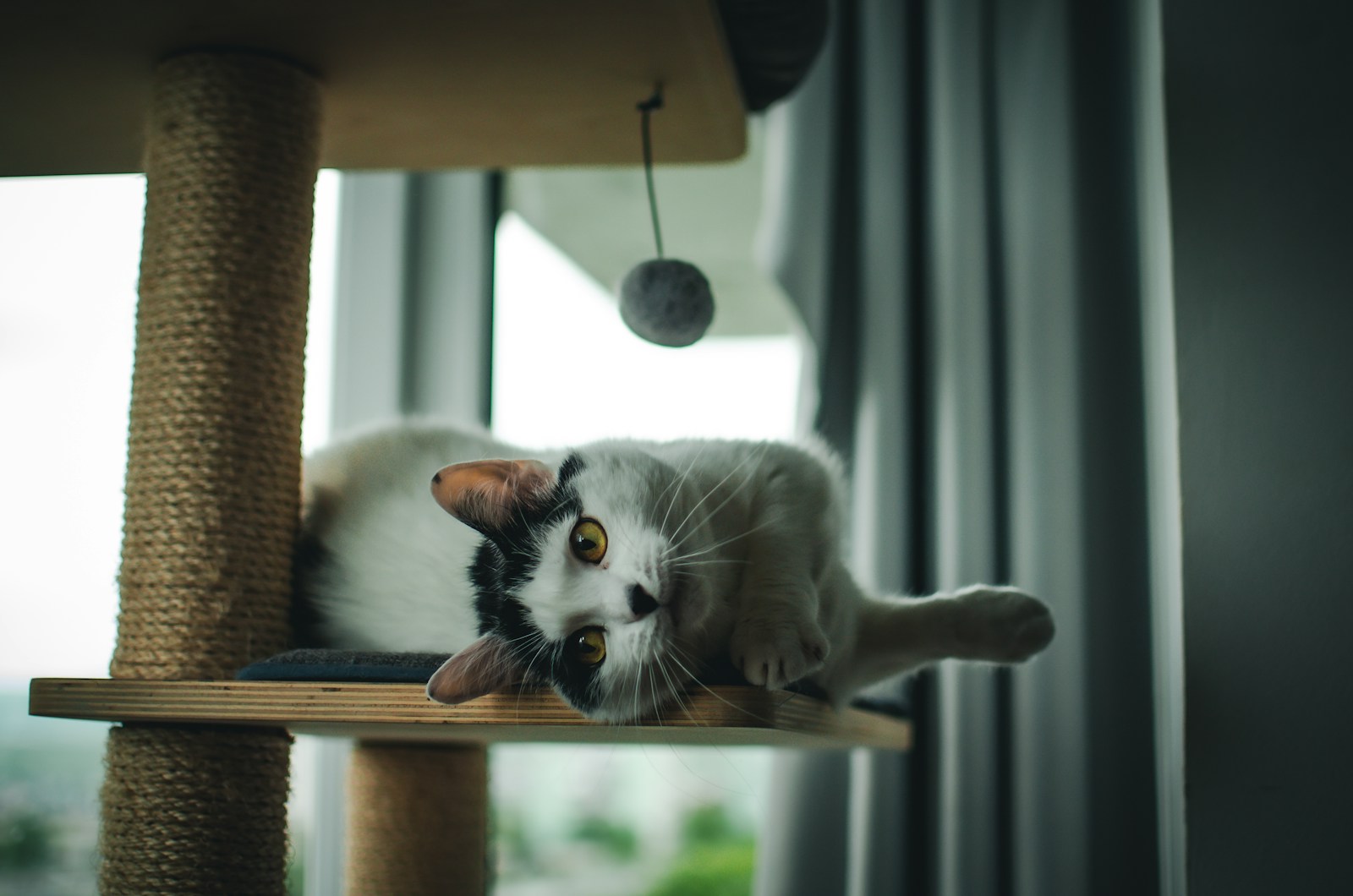
Dangling toys on strings are the main one. They look fun, but PetMD warns that long strands can tangle kittens and cause strangulation or cut off blood flow to a limb, and that string toys should only be used under supervision. Swap them for a wand toy you control during play time. Novelty shapes and too many levels can also be a trade-off: slim, sculpted posts often mean less scratching surface and a narrower base.
Choosing a tree for your cat
Match the tree to your cat’s size, age and household: small and low for kittens and seniors, wide and heavy for big breeds, and several separate high spots for multi-cat homes.
| Your cat | Look for | Avoid |
|---|---|---|
| Kitten | Low to medium height, small step gaps, sisal post, sturdy base | Dangling strings, very tall towers with big jumps |
| Active young adult | Tall tree, 3 ft+ sisal post, several levels, wall anchor | Short sisal bands, light bases |
| Large breed (Maine Coon, Ragdoll) | Wide perches, thick posts, heavy base, anti-tip kit | Small round platforms, narrow condos |
| Senior or arthritic cat | Low tree, steps or ramp, padded wide platforms, softer scratch surface | Big gaps between levels, high-only perches |
| Multi-cat home | Several separate high spots, condos with two exits, more than one tree | One tree as the only high spot |
Kittens
Kittens climb everything, but they are small and still learning to land. A kitten-sized tree with a scratching post is a better start than a giant tower. PetMD suggests giving kittens smaller things to climb, such as kitten-sized trees. You can add height later as they grow and as you learn whether your kitten is a climber or a ground-dweller.
Large breeds
Big, heavy cats put much more force on a tree when they land. If you live with a large breed, check how big your cat really is. Our breed answers cover how big British Shorthairs get and how big Bengal cats get, and our Maine Coon breed profile and Ragdoll breed guide cover two of the largest breeds. For these cats, buy for the cat’s full adult size, look for perches wider than the cat curled up, and always use the wall anchor.
Long-coated big cats also leave a lot of fur on fabric perches. If you are wondering whether Maine Coons shed, the short answer is yes, so washable covers are worth having.
Senior cats
Older cats still like height, but jumping often gets harder. Cornell Feline Health Center reports that in one study, X-rays showed evidence of degenerative joint disease in 90 percent of cats over 12. Cats rarely limp from it. Instead, International Cat Care lists signs like hesitating or refusing to jump, jumping onto lower surfaces than before, and jumping less often.
For these cats, choose a lower tree with small step-ups, a ramp or pet steps to a favorite perch, and wide padded platforms. The survey also found cats over 10 chose carpet slightly more often than rope, so a softer scratch surface may suit them better. Our Senior Cat Care: The Complete Guide for Cats 10+ has more on adapting your home.
Multi-cat homes
Cats that live together do not always get along, and competing for the one good perch is a common source of tension. International Cat Care recommends providing one of each key resource per cat plus one, so a four-cat home would have five. That applies to high resting places too.
It is worth taking seriously. A 2025 review in the Veterinary Nursing Journal notes that chronic stress can weaken the immune system and that stressed cats are more likely to develop upper respiratory disease. Spread trees and perches across different rooms so a shy cat can reach a high spot without walking past a rival.
Where should you put a cat tree?
Put the tree where your family spends time, ideally beside a window and against a wall. A tree hidden in a spare room often goes unused.
VCA Animal Hospitals advises placing cat activity trees in areas where the family spends time, not in a back room or garage. Cats want to watch what is going on. A window adds a view of birds and passing life, which is why your cat may chatter at birds from a window perch. Placing the tree against a wall, as Catster suggests, also adds stability.
Placement tips
- Near the scene of the crime. If your cat scratches a sofa arm, put the tree’s scratching post right next to it.
- Near sleeping spots. Cats often scratch and stretch when they wake up.
- Clear landing zones. Leave space around the tree so jumps on and off are safe.
- Away from hazards. Keep trees away from blind cords, shelves of breakables and open windows without screens. Our tips for cat-proofing your home cover more.
- On a level floor. An uneven floor makes any tree rock.
How to get your cat to use a new tree
Make the tree smell familiar, reward your cat for using it, and never force them onto it. Most cats explore a new tree in their own time if it is stable and well placed.
Rewards work. In the 2016 survey, owners who rewarded their cat with treats, praise or petting were more likely to report daily use of the preferred post (80.4%) than owners who never rewarded it (67.7%). Punishing scratching on furniture did not reduce the unwanted scratching.
- Put a blanket or bed that smells of your cat (or of you) on one of the perches.
- Play with a wand toy around and up the tree so your cat climbs while chasing.
- Drop a treat on a low platform, then a higher one, over several days.
- Praise or treat your cat when you see them scratch the tree.
- Rub a little catnip on the post if your cat responds to it.
- Be patient. Some cats need days or weeks to trust a new object.
You may find your cat kneading the new bed or rubbing their head on the posts. Both are good signs that they are settling in and marking it with their scent. And if your cat uses the tree as a launch pad during an evening sprint, that is normal too: here is why cats get the zoomies.
Safety checks and upkeep
Check a cat tree every few weeks for loose screws, wobble and frayed rope, vacuum it regularly, and replace it once it can no longer be made stable.
| How often | Task |
|---|---|
| Weekly | Vacuum or lint-roll perches and beds; wash removable covers as needed |
| Monthly | Push-test the top for wobble; tighten screws and bolts; check the wall anchor |
| Every few months | Inspect sisal for fraying or loose glue; check hammocks and fabric for tears |
| When it fails | Replace posts, or the whole tree if it still wobbles after tightening |
Also check new trees for loose staples, sharp edges and exposed hardware before your cat climbs. Remove any string toys that came attached if your cat will be alone with the tree. Wall shelves and window perches should be securely installed and suited to your cat’s size and mobility, as the Toronto Humane Society advises.
When to call the vet
Call your vet if your cat suddenly stops climbing or jumping, struggles to use the tree, or is hurt in a fall. A change in how a cat uses height is often an early clue to pain.
- Your cat no longer jumps to favorite high spots or now uses only the lowest level. This is a common sign of arthritis, according to International Cat Care and Cornell.
- Your cat seems stiff, grooms less, hides more, or has trouble getting into the litter box.
- Your cat falls from the tree, then limps, seems sore, breathes oddly or acts unlike themselves.
- Your cat suddenly cannot use the back legs. This is an emergency. Contact your vet or an emergency clinic right away.
- New hiding up high, swatting or fighting over perches in a multi-cat home, which may point to stress or pain that needs a vet’s help.
For a wider checklist of warning signs, see 20 signs that your cat may be sick.
How we researched this guide
Catish did not test any cat trees for this guide. It is based on published guidance from feline veterinary organizations (AAFP, ISFM, International Cat Care, Cornell Feline Health Center), animal welfare groups, a peer-reviewed owner survey on scratching behavior, and expert advice published by veterinary and pet-care sources listed below. We did not include prices because they change often, and we do not use affiliate links.
Frequently asked questions
Do indoor cats really need a cat tree?
Indoor cats need vertical space, and a cat tree is the easiest way to provide it. Shelves, window perches and cleared furniture can also work. Most cats benefit from at least one high, stable spot plus a scratching post.
How tall should a cat tree be for an adult cat?
Aim for a top perch above your furniture and a scratching post over 3 feet long. Seniors, kittens and cats with mobility problems do better with lower trees and smaller steps.
Why won’t my cat use the cat tree?
The usual reasons are wobble, perches that are too small, poor placement in a quiet room, or a scratching surface your cat dislikes. Fix stability first, then move the tree near a window or a favorite spot and use treats and play to build interest.
Should I anchor my cat tree to the wall?
Yes, if the tree is tall, sits on carpet, or is used by a big cat or several cats. Use the anti-tip kit that came with it or a furniture strap fixed into a wall stud.
Is sisal or carpet better on a cat tree?
Sisal is the better first choice for most cats because it is durable and was the surface cats used most when offered in a large owner survey. Some older cats prefer carpet, so a tree with both can suit a household with different ages.
How many cat trees do I need for two or more cats?
International Cat Care’s general rule is one of each key resource per cat plus one. You do not need that many full trees, but aim for that many separate high resting spots spread through the home.
Are cat trees safe for kittens?
Yes, if the tree is stable and kitten-sized. Remove dangling string toys or only allow them when you are watching, because long strands can tangle a kitten.
When should I replace a cat tree?
Replace posts when the sisal is shredded, and replace the whole tree if it still wobbles after you tighten everything, or if platforms or hammocks are broken. An unstable tree is a fall risk.
Quick answers
- Is it normal for my cat to sleep so much? Yes, healthy adult cats often sleep 12 to 16 hours a day.
- Why does my cat chatter at birds? Usually from excitement or frustration at prey they can’t reach.
- Why does my cat get the zoomies? Short bursts of wild play are normal; sudden changes need a vet.
- Why do cats knead? It is a comfort behavior left over from kittenhood.
- Why does my cat headbutt me? To leave scent and show trust.
- How big do Bengal cats get? Most adults weigh about 6 to 12 pounds, some males more.
- How big do British Shorthair cats get? Males usually weigh about 12 to 18 pounds.
- Do Maine Coon cats shed? Yes, and their long coat needs regular combing.
Sources
- 2024 AAFP indoor/outdoor lifestyle position statement, Journal of Feline Medicine and Surgery
- AAFP and ISFM Feline Environmental Needs Guidelines, AAFP
- Your Cat’s Environmental Needs: Practical Tips for Pet Owners, AAFP and ISFM
- Feline Environmental Needs Guidelines, VCA Animal Hospitals
- Cat Behavior and Training: Enrichment for Indoor Cats, VCA Animal Hospitals
- Owner observations regarding cat scratching behavior: an internet-based survey, Journal of Feline Medicine and Surgery
- Scratching Behavior in Cats, Clinician’s Brief
- Scratching: what it is and why cats do it, International Cat Care
- Creating a cat-friendly home, International Cat Care
- Multi-cat households, International Cat Care
- Arthritis in cats, International Cat Care
- Is Your Cat Slowing Down?, Cornell Feline Health Center
- Osteoarthritis in Cats: More Common Than You Think, U.S. FDA
- Keeping Cats Indoors, The Ohio State University Indoor Pet Initiative
- Why Do Cats Like High Places?, PetMD
- 6 Dangerous Kitten Toys You Should Avoid, PetMD
- Vertical Space for Cats: Level Up Their Home, Toronto Humane Society
- Scratching Posts, San Francisco SPCA
- Creating harmony in multi-cat households, Veterinary Nursing Journal
- How to Make a Cat Tree More Stable, Catster
- A Guide to Cat Furniture: Towers, Trees, and Condos, PetSmart
- Best Cat Trees, TIME Stamped
This article is general information and is not a substitute for advice from your veterinarian.