

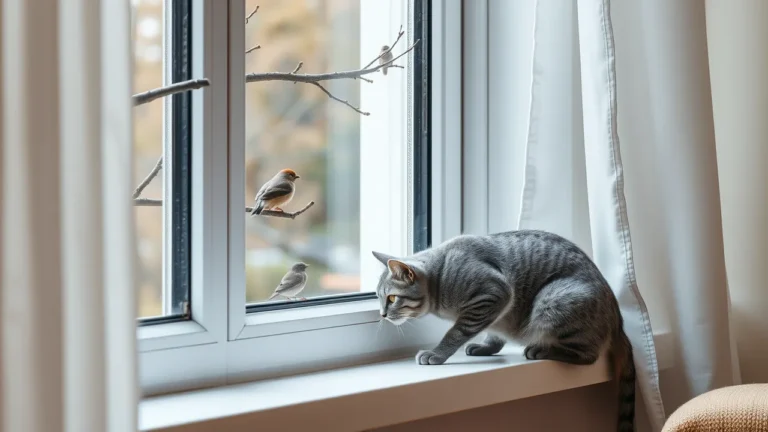
Your cat chatters at birds because seeing prey it can’t reach sets off its hunting instincts, and the sound is most likely a mix of excitement and frustration. It is a normal, harmless behavior, though a sudden new habit or a big increase is worth a vet check.
Key takeaways
- Chattering is a fast opening and closing of the jaw, often with chirps or clicks.
- It usually happens when an indoor cat sees birds or other small animals through a window.
- The leading explanation is excitement or frustration about prey that is out of reach.
- Not every cat chatters, and that is fine too.
- Daily play with wand toys gives your cat a healthy outlet for its hunting drive.
What does cat chattering look like?
Cat chattering, also called chirping or twittering, is when a cat quickly opens and closes its mouth while making stuttering, clicking or high-pitched chirping sounds. The UK charity Cats Protection notes that the cat usually looks fully focused at the same time. You may see:
- A low, crouched body
- Ears pointing forward
- Wide eyes and a fixed stare
- A tail moving from side to side
It is more common in indoor cats who can watch wildlife but can’t get to it, although outdoor cats do it as well. Big cats chatter too. Certified cat behavior consultant Ingrid Johnson told Chewy that wild relatives such as cheetahs and mountain lions make similar sounds.
Why do cats chatter instead of staying quiet?
Nobody knows for certain, but there are several theories. A cat that can actually hunt usually stays silent so it won’t scare its prey away. Chattering tends to show up when the prey is out of reach, such as on the other side of a closed window.
| Theory | The idea | How likely? |
|---|---|---|
| Excitement or frustration | A rush of adrenaline at seeing prey the cat wants but can’t catch | Most widely accepted |
| Copying prey | The chirps sound a bit like birds or rodents, which might help a cat get closer | Possible |
| Practicing the bite | The jaw movement may echo the bite a cat uses to catch prey | Considered unlikely |
| Warning the animal away | The cat may be telling the bird to leave its territory | Considered unlikely |
Cats Protection adds that some cats may chatter to let their owner know they want to go outside, especially if the noise has worked before. Chattering is one of many ways cats express themselves, like kneading or headbutting you.
Should you stop your cat from chattering?
Usually there is no need. Experts quoted by Chewy say you don’t have to stop or redirect the behavior, and that watching birds can be good mental exercise. If your cat seems wound up or frustrated afterward, Cats Protection suggests two simple steps:
- Play with them. Use a fishing-rod toy and move it like a bird or mouse so your cat can stalk, pounce and “catch” something. Short daily sessions help satisfy the hunting urge.
- Block the view. Cover the lower part of a favorite window with an opaque sticker or card so your cat can’t see the birds that get it riled up.
When should you call the vet?
Chattering on its own is not a sign of illness. But if your cat suddenly starts chattering when it never did before, or does it much more than usual, Cats Protection advises getting a vet check to rule out a medical cause. Call your vet sooner if the chattering comes with other changes, such as drooling, pawing at the mouth, eating less or acting withdrawn.
Frequently asked questions
Is my cat trying to talk to the birds?
Not in the way people talk. The sound seems to come from excitement about prey, though one theory says the chirps may mimic prey sounds.
Is it a problem if my cat never chatters?
No. Plenty of healthy cats never make this sound.
Does chattering mean my cat is unhappy indoors?
Not necessarily. It can simply be excitement. Regular play helps keep an indoor cat’s hunting instincts satisfied.
Sources
- Why do cats chatter and chirp at birds?, Cats Protection
- Why Do Cats Chirp at Birds? Is This Normal?, Chewy
This article is general information and is not a substitute for advice from your veterinarian.