

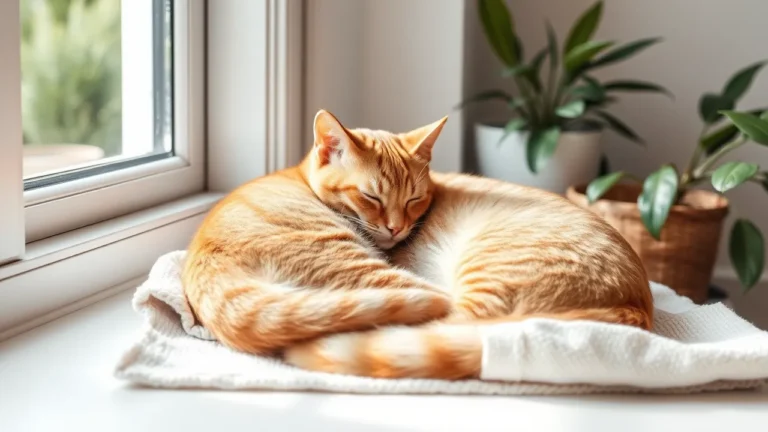
Yes, it is usually normal: healthy adult cats often sleep 12 to 16 hours a day, and some sleep even more. What matters is not the total hours but a sudden change in your cat’s usual pattern, or a cat that seems dull or unwell when awake.
Key takeaways
- VCA Animal Hospitals says cats commonly sleep 12 to 16 hours a day.
- Young kittens, indoor cats and overweight cats tend to sleep more.
- Hot weather can add a few extra hours of sleep.
- A healthy sleepy cat still wakes up for food, play and visitors.
- A sudden change in sleep, or sleep plus other symptoms, is a reason to see the vet.
How many hours a day do cats sleep?
Estimates vary. VCA puts the typical range at 12 to 16 hours a day. CatWatch, a newsletter produced with Cornell’s Feline Health Center, quotes Dr. Katherine Houpt of Cornell’s Animal Behavior Clinic saying an average house cat sleeps about 10 hours a day, while some cats sleep 16 hours, and as many as 18 in hot weather.
Because the numbers differ so much, VCA advises against counting hours at all. Day-to-day sleep varies a lot, so your cat’s normal routine is a better yardstick than any chart.
Why do cats sleep so much?
It’s built in. Domestic cats come from wild hunters that rested during the day so they had energy to hunt at dawn and dusk. According to Dr. Houpt, cats usually have two main sleep periods at night, plus several shorter naps during the day.
Much of that time is light dozing rather than deep sleep:
| Sleep type | Typical length | What you’ll see |
|---|---|---|
| Light sleep | Up to about 30 minutes | Often sitting in a “sphinx” pose, paws tucked, ready to jump up |
| Deep sleep | About 10 minutes | Lying flat or curled, relaxed, with twitching paws, whiskers or eyes |
Which cats sleep the most?
- Young kittens: until about 3 months old, they sleep most of the day and night.
- Indoor cats: with less to do and no need to hunt, they probably sleep more than outdoor cats.
- Overweight cats: heavier cats tend to sleep more than slim ones.
- Cats in hot weather: sleep time can stretch longer on hot days.
Once an adult cat’s sleep pattern settles, it usually stays fairly steady for life. That is why a change is worth noticing.
When should you call the vet?
VCA suggests asking yourself a few questions:
- Is my cat sleeping at different times than usual?
- Does my cat still perk up for treats, the can opener or a visitor?
- Is my cat sleeping through meals or playtime?
- Does my cat seem alert when awake, or groggy and listless?
- Are there other signs, such as vomiting, coughing or hair loss?
Dr. Houpt notes that a cat who suddenly sleeps much more has, in some cases, been linked to illnesses such as kidney disease, cancer or a form of age-related mental decline. Sleeping much less matters too: an older cat who sleeps less and is unusually active may have an overactive thyroid. A cat that starts sleeping in a new, odd position may be uncomfortable. Any big change deserves a vet check.
For other warning signs, see 20 signs your cat may be sick and why your cat may be drinking more water. If your cat is 10 or older, our senior cat care guide covers changes to watch for.
Frequently asked questions
Is it normal for my cat to twitch while sleeping?
Yes. Twitching paws, whiskers and eye movements are normal during short bursts of deep sleep.
Do cats sleep more when it’s hot?
Often, yes. Some cats sleep up to about 18 hours a day in hot weather.
Is it normal for a kitten to sleep all day?
Yes. Young kittens sleep most of the day and night until about 3 months old, when a more adult pattern sets in.
Sources
- Is your pet sleeping too much?, VCA Animal Hospitals
- Feline Sleep Behavior: What’s Normal?, CatWatch (Cornell Feline Health Center)
This article is general information and is not a substitute for advice from your veterinarian.