

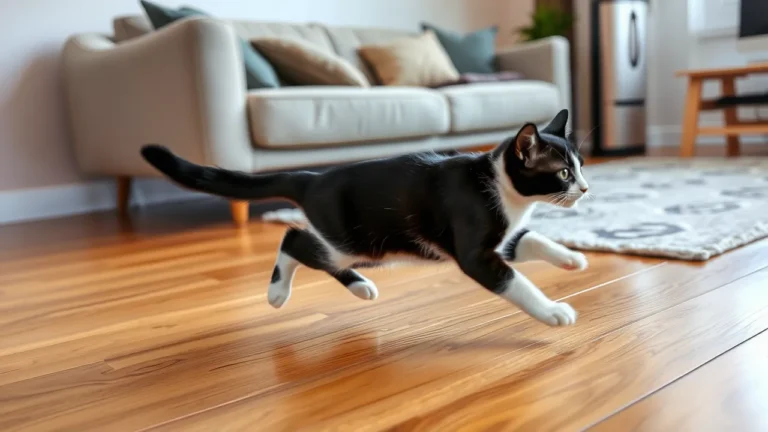
Cats get the zoomies to burn off pent-up energy, act out hunting instincts or let off stress, and in most cases it is normal, healthy play. The main exception is a sudden change: if your cat starts zooming far more or far less than usual, it is worth a vet check.
Key takeaways
- Vets call zoomies “frenetic random activity periods,” or FRAPs.
- They are usually short, can happen any time of day or night, and are common around dawn and dusk.
- Common triggers are a long stretch of inactivity, hunting instinct and stress relief.
- More zoomies in an older cat can be a sign of an overactive thyroid.
- Fewer zoomies, or less jumping and playing, can be a sign of joint pain.
What are cat zoomies?
Zoomies are those moments when a calm cat suddenly tears across the room, races up the stairs, skids around corners and leaps onto furniture. Veterinarian Tracey Deiss, speaking to Care.com, describes them as sudden, spontaneous bursts of energy that are usually brief and can strike at any hour. The official name is frenetic random activity periods, or FRAPs.
Cats are not alone in this. Live Science reports that FRAPs show up in many pet and wild animal species, and José Arce, then president-elect of the American Veterinary Medical Association, told the outlet that zoomies are simply pets having fun.
Why do cats get the zoomies?
The most common reasons, according to veterinarians quoted by Care.com, are:
- Stored-up energy. A cat that has been inactive all day may release that energy in a burst, especially at twilight.
- Hunting instinct. Sprinting, pouncing and sharp turns mimic the way cats chase prey.
- Stress relief. Zoomies are more common in multi-cat homes, where running can help a cat let off tension.
Emergency veterinarian Kate Domenico told Care.com that zoomies are considered normal and usually mean a cat is healthy and active. Indoor cats with little to do may zoom more, so daily play helps. Our indoor cat enrichment guide has simple ideas.
Why does my cat get the zoomies at night?
Cats sleep a lot during the day (see is it normal for my cat to sleep so much?), and their natural rhythm makes them more active around dawn and dusk. After hours of rest, that energy often comes out in the evening or early morning. A play session with a wand toy before bedtime can help some cats settle.
Are zoomies ever a sign of a health problem?
| What you notice | What it may mean |
|---|---|
| Short bursts, then normal behavior | Usually normal play |
| Older cat suddenly much more active, plus weight loss, big appetite or more thirst | Possible hyperthyroidism; see a vet |
| Cat zooms, jumps or plays much less than before | Possible joint pain such as arthritis; see a vet |
| Cat seems frightened, in pain or runs the same pattern over and over | Worth filming and showing your vet |
The Cornell Feline Health Center lists hyperactivity among the signs of hyperthyroidism, a common disease in middle-aged and older cats. Its most common signs are weight loss, a bigger appetite, and more drinking and urinating. On the other side, Dr. Deiss notes that a cat who slows down in zoomies, jumping or climbing stairs could be feeling arthritis pain. Our senior cat care guide covers other changes to watch for in older cats.
When should you call the vet?
- Your cat’s zoomies suddenly become much more or much less frequent.
- An older cat is newly restless along with weight loss, hunger or extra thirst.
- Your cat cries out, seems scared or looks hurt during an episode.
If you are not sure whether what you see is normal, record a short video and show it to your veterinarian, a tip Dr. Arce shared with Live Science.
Frequently asked questions
Do I need to stop my cat’s zoomies?
No. Normal zoomies are healthy play. Just move breakable items and keep stairs and floors clear so your cat can run safely.
Do kittens get the zoomies more than adult cats?
Zoomies are common in both kittens and adult cats, and any healthy cat can have them.
How long do cat zoomies last?
Usually only a short time. Vets describe them as brief bursts, after which most cats go back to their normal calm selves.
Sources
- Why do cats get the zoomies?, Care.com
- Why do pet dogs and cats race around?, Live Science
- Hyperthyroidism in Cats, Cornell Feline Health Center
This article is general information and is not a substitute for advice from your veterinarian.