

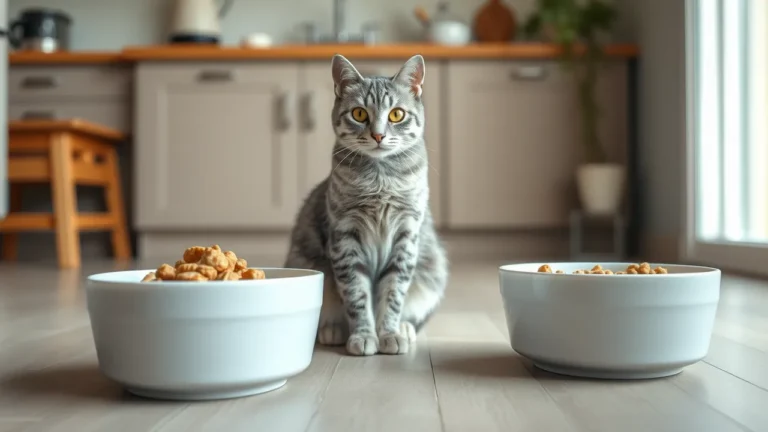
This guide explains how wet and dry cat food really differ, which cats do better on each, how to compare labels fairly, and how to switch foods without upsetting your cat’s stomach. The single most important takeaway: any food labeled complete and balanced for your cat’s life stage can work, but wet food adds a lot of water, and many cats benefit from that extra moisture.
Key takeaways
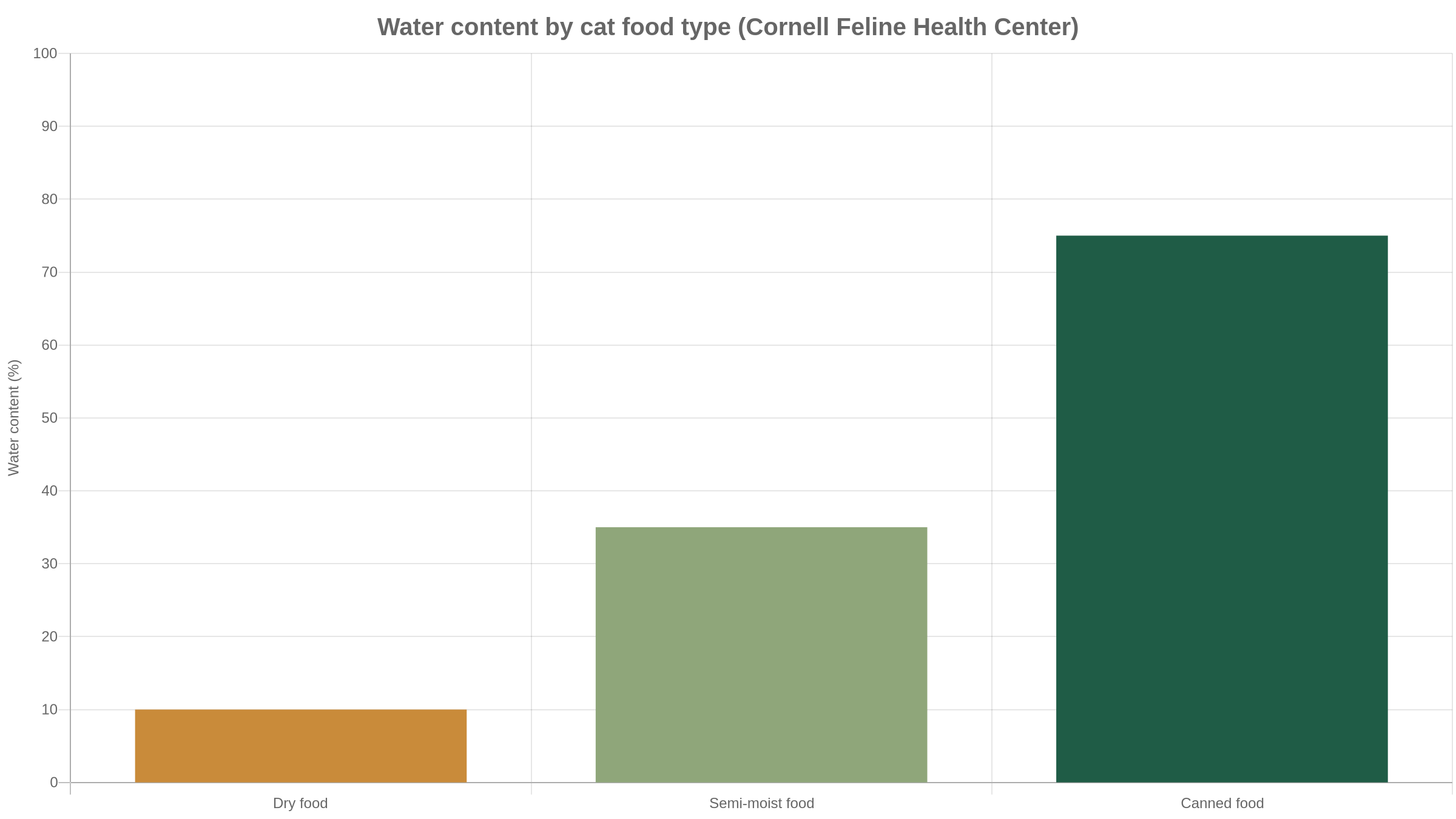
- Dry food is about 6 to 10 percent water; canned food is at least 75 percent water, according to the Cornell Feline Health Center.
- Neither type is best for every cat. A food labeled “complete and balanced” for your cat’s life stage matters more than its texture.
- Wet food is the easier way to raise water intake, which vets often want for cats with urinary or kidney problems.
- Dry food packs far more calories into each bite, so measure it carefully. Free-fed kibble is a common route to weight gain.
- Regular dry food does not clean teeth. Only foods proven to work, such as those with the VOHC seal, have a dental benefit.
- Compare wet and dry labels on a dry matter basis, not by the raw percentages printed on the package.
- Switch foods slowly over about 7 to 10 days, and call your vet if your cat stops eating.
In this guide
- What is the real difference between wet and dry cat food?
- Wet vs dry cat food at a glance
- Why water matters so much for cats
- Calories, weight and portion control
- Does dry food clean a cat’s teeth?
- Which cats do better on wet food, and which on dry?
- Is feeding both wet and dry food a good idea?
- How to read a cat food label and compare wet and dry fairly
- How to store wet and dry food safely
- How to switch from dry to wet food (or the other way)
- When to call the vet
- Frequently asked questions
What is the real difference between wet and dry cat food?
The biggest difference is water. Dry food is mostly nutrients with a little moisture, while canned food is mostly water with the nutrients spread through it. That one fact changes calories per bite, how labels read, how the food is stored and how much your cat drinks.
The Cornell Feline Health Center groups commercial cat foods into three main types: dry, semi-moist and canned. They differ in water, protein level, calorie density, taste appeal and digestibility.
Dry food (kibble)
Dry food is made by mixing ingredients into a dough, pushing it through a machine called an extruder and drying the pieces. Cornell notes that kibble is often coated with flavor boosters such as animal fat to make it more appealing. Dry food holds between 6 and 10 percent water. It is usually cheaper than canned food, and because it does not spoil quickly in the bowl, it can be left out for “free choice” feeding.
Semi-moist food
Semi-moist food sits in the middle, at roughly 35 percent water. Cornell says it is mainly meat and meat byproducts, with added grains, soybean meal and preservatives. It is less common today, and once opened it can dry out or turn rancid.
Wet (canned) food
Canned food contains at least 75 percent water, which makes it a good source of fluid. Cornell describes it as generally the most expensive type but also the tastiest for most cats. Sources give slightly different figures for moisture: the Royal Canin Academy puts wet food at 60 to 80 percent, while PetMD uses about 70 percent. The exact number varies by product, so check the moisture line on the label.
What about raw and fresh foods?
Raw and “gently cooked” foods are a separate category. The Cornell Feline Health Center does not recommend raw diets. It says they may carry live bacteria, viruses and parasites that can infect cats and the people who live with them, and that clear health benefits have not been shown. This guide focuses on cooked commercial wet and dry foods.
Wet vs dry cat food at a glance
Here is a side-by-side summary. Each row is explained in more detail in the sections below.
| Factor | Wet (canned) food | Dry food (kibble) |
|---|---|---|
| Water content | At least 75% | 6% to 10% |
| Calories per gram | About 0.8 to 1.5 kcal | About 3 to 4 kcal |
| Helps hydration | Yes, a major advantage | Cat must drink more to make up the difference |
| Cost | Usually the most expensive type | Usually cheaper per calorie |
| Convenience | Must be refrigerated after opening | Easy to store, measure and use in feeders |
| Can be left out | Only for a few hours | Longer, but free feeding can lead to overeating |
| Taste appeal | High for most cats | Varies; many cats love it |
| Dental benefit | None on its own | None for regular kibble; only proven dental diets help |
Why water matters so much for cats
Many cats do not drink much, so the water in their food makes a real difference to their total intake. Wet food raises a cat’s total daily water intake even though cats eating it tend to drink less from the bowl.
Cats get water from three places: what they drink, what is in their food and a small amount made inside the body as food is broken down. A cat eating only kibble has to drink much more to reach the same total as a cat eating canned food. The Royal Canin Academy, a veterinary education site, notes that wet food increases total water intake, and that the strongest reason to choose it is a cat with urinary disease that needs more dilute urine.
Water and the urinary tract
When a cat takes in little water, its kidneys hold on to fluid and the urine becomes concentrated. Royal Canin explains that crystals and bladder stones are more likely to form in highly concentrated urine. Two common stone types in cats are struvite and calcium oxalate. Diluting the urine means more frequent urination and less time for minerals to build up.
Dr. Bruce Kornreich, director of the Cornell Feline Health Center, has pointed out that cats are prone to chronic kidney disease and urinary issues, and that low water intake may contribute to or worsen them. That is why many vets suggest adding wet food for cats with these conditions.
Ways to add water if your cat only eats dry food
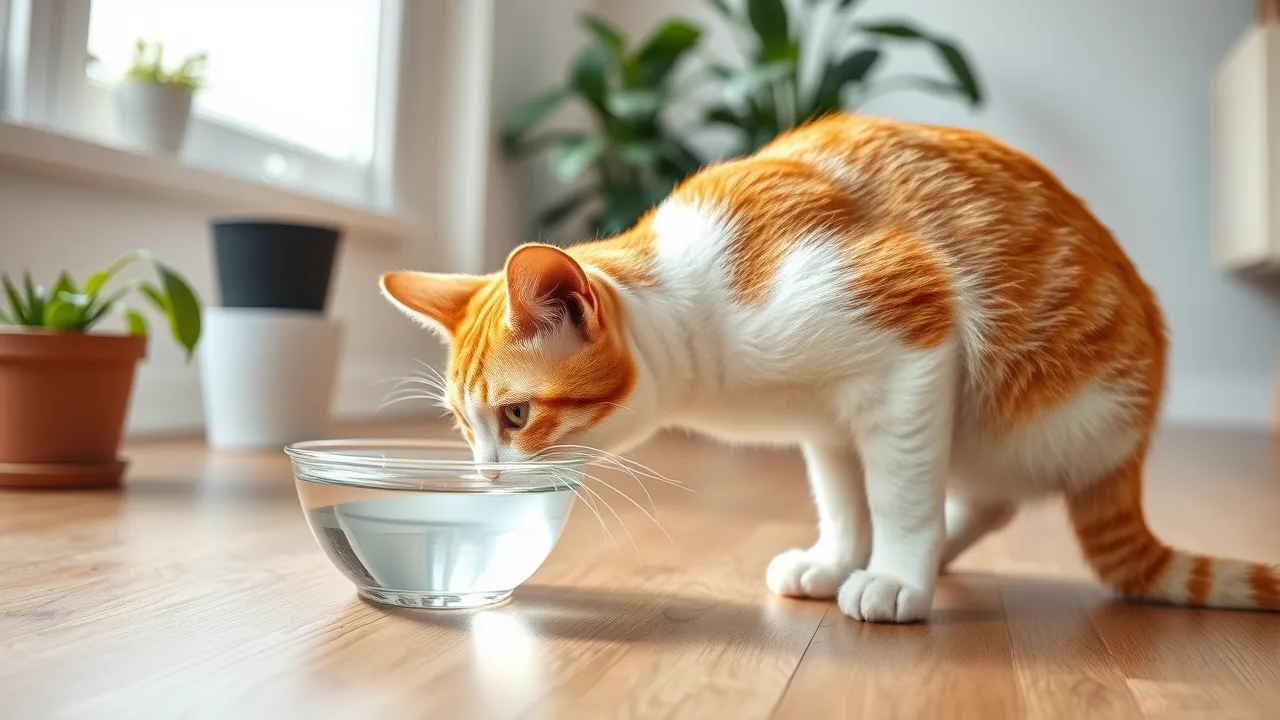
- Add a little water to kibble, if your cat accepts it. Several vets suggest this for cats that refuse canned food.
- Offer several water bowls around the home, away from the litter box.
- Keep water fresh and bowls clean, since stale water can put cats off.
- Try a mix: even part of the day’s calories as wet food adds moisture.
Watch for the opposite problem too. A cat that suddenly drinks far more than usual may be ill, not just thirsty. Read our quick answer on why your cat is drinking so much water to learn which signs need a vet visit.
Calories, weight and portion control
Dry food is far more calorie-dense than wet food, so the same bowl-full delivers very different amounts of energy. Measuring portions matters with both types, but it matters most with kibble.
Preventive Vet puts dry diets at about 3 to 4 kcal per gram and wet food at roughly 0.8 to 1.5 kcal per gram. In practical terms, a cat may eat only about one-third of a cup of dry food to get the same calories as a full cup of wet food. That is good value for the owner, but it also makes overfeeding easy.
Obesity is the most common nutrition-related problem in cats, according to Cornell, and it raises the risk of arthritis and diabetes. A Purina Institute report on pet obesity lists dry food as a risk factor in some studies, mainly because owners may overfill bowls or leave food out all day without measuring.
Can wet food help a cat lose weight?
There is some evidence it may. In a small study from the University of California, Davis (Wei and colleagues, 2011), young male cats were fed either a canned food or the same food freeze-dried. When eating the wetter version, cats took in fewer calories and lost a small but measurable amount of weight. The researchers’ summary in dvm360 notes that the two diets were identical apart from water, so the results may not apply to every wet and dry food on the market.
Weight loss is still possible on dry food. The Royal Canin Academy notes that pets have lost weight on dry diets with added fiber. What matters most is the total number of calories, which your vet can help you set.
Don’t trust every “weight control” label
A 2010 study in the Journal of the American Veterinary Medical Association looked at 49 cat foods sold for weight management. Calorie density ranged from 235 to 480 kcal per cup for dry foods and from 78 to 172 kcal per can for canned foods. The feeding directions for weight loss also varied widely. The lesson: read the calorie statement, not just the front of the bag.
Treats count too
Cornell’s rule of thumb is to keep treats under 10 to 15 percent of daily calories. Human foods are a common source of hidden calories. Plain tuna, for example, is fine now and then but should not be a daily food; see can cats eat tuna for safe amounts. Cornell also warns that some cats eating canned fish made for people have developed serious nerve problems. For a wider list, read what human foods are safe for your cat.
Does dry food clean a cat’s teeth?
Regular dry food does not clean cats’ teeth in any meaningful way. Only specially designed dental foods that have passed testing, such as those carrying the Veterinary Oral Health Council (VOHC) seal, have shown a benefit.
VCA Animal Hospitals explains that vets once recommended dry food to prevent gum disease, but clinical studies have shown that dry food alone does not improve oral health. The Royal Canin Academy lists “dry food cleans the teeth” as a common myth, noting that most ordinary dry foods do not lower the risk of periodontal disease by themselves. One reason is simple: many cats swallow kibble whole or crack it at the tip of the tooth.
If dental health is your goal, ask your vet about a VOHC-accepted dental diet. VCA adds that mixing a dental diet with another food can reduce how well it works. Tooth brushing remains the best home care; our guide on how to brush your cat’s teeth walks you through it.
The flip side is also true. Wet food does not “rot” teeth on its own. Cats on any diet can develop dental disease, so regular dental checks matter whatever you feed.
Which cats do better on wet food, and which on dry?
Healthy adult cats usually do well on either type. The choice becomes more important when a cat has a health condition, a weight problem or special needs at the start or end of life.
Dr. Joseph Wakshlag, chief of nutrition at Cornell’s veterinary college, summed it up for Cat Watch: “It really depends on the health status of the cat.” Use the table below as a starting point, then confirm the plan with your vet.
| Your cat’s situation | Often a good fit | Why |
|---|---|---|
| Urinary crystals, stones or bladder inflammation | Wet food (or a vet urinary diet) | More water means more dilute urine |
| Kidney disease | Wet food, if the cat will eat it | Extra fluid supports hydration |
| Overweight cat | Wet food or a measured mix | Fewer calories per bite and more volume |
| Few or missing teeth | Wet food | Easier to eat without chewing |
| Picky or poor appetite | Wet food, often warmed slightly | Stronger smell and taste |
| Healthy adult, busy household | Dry, wet or both | Choose what works for you and the cat |
| Puzzle feeders and timed feeders | Dry food | Easier to portion and dispense |
Kittens
Kittens need food labeled for growth or for all life stages, whether wet or dry. Dr. Wakshlag has suggested getting cats used to both textures early, so you can switch later if a health issue calls for it. Wondering about mixing in the kitten’s food for older cats? See can you feed kitten food to an adult cat.
Senior cats
Older cats are more likely to have kidney disease, dental pain and a fading appetite, all of which can favor wet food. Some seniors also lose weight and need denser calories, which dry food provides. Our senior cat care guide covers feeding changes after age 10 in detail.
Is feeding both wet and dry food a good idea?
Yes, for many households a mix works well. It gives the cat extra water from wet meals while keeping the convenience and lower cost of dry food.
PetMD notes that a combination can be especially useful for cats that need more water but prefer kibble. Cornell adds that offering two or three different foods gives variety and may stop a cat from becoming fixed on just one. That flexibility helps if a food is discontinued or your vet later asks for a diet change.
How to mix without overfeeding
- Find your cat’s daily calorie target with your vet.
- Decide what share comes from wet food, for example half.
- Use the calorie statements on each label to work out portions.
- Cut the dry portion when you add wet food. Do not simply add wet food on top.
- Weigh your cat every few weeks and adjust.
Feed in a way that suits how cats eat
The American Association of Feline Practitioners (AAFP) has a consensus statement on how to feed cats. It says cats naturally prefer to eat several small meals a day, alone. It recommends splitting the daily food into small meals, using puzzle feeders and offering multiple food and water stations. Dry food suits puzzle feeders well, and slow feeder bowls can help fast eaters. In multi-cat homes, separate feeding spots reduce competition.
How to read a cat food label and compare wet and dry fairly
Start with the nutritional adequacy statement, then compare nutrients on a dry matter basis. The raw percentages on the package are misleading when one food is mostly water and the other is not.
Step 1: Find the “complete and balanced” statement
In the United States, nutrient standards for cat food come from the Association of American Feed Control Officials (AAFCO). Cornell says foods carrying an AAFCO statement are considered nutritionally complete and balanced. The statement should name a life stage, such as growth, adult maintenance or all life stages. Foods labeled for “intermittent or supplemental feeding” are not meant to be a cat’s only diet, so check carefully on fancy toppers and some gourmet cans.
The statement also tells you how adequacy was shown. “Formulated to meet” means the recipe was calculated to meet AAFCO nutrient levels. “Animal feeding tests using AAFCO procedures” means the food was also fed to cats in a trial.
Step 2: Check the ingredient list
Ingredients are listed in order of weight. Cats are obligate carnivores, which means they rely on nutrients found only in animal products. Cornell suggests looking for meat, meat byproducts or seafood among the first few ingredients. Keep in mind that wet ingredients such as fresh meat weigh more because of their water, which can push them up the list.
Step 3: Convert to a dry matter basis
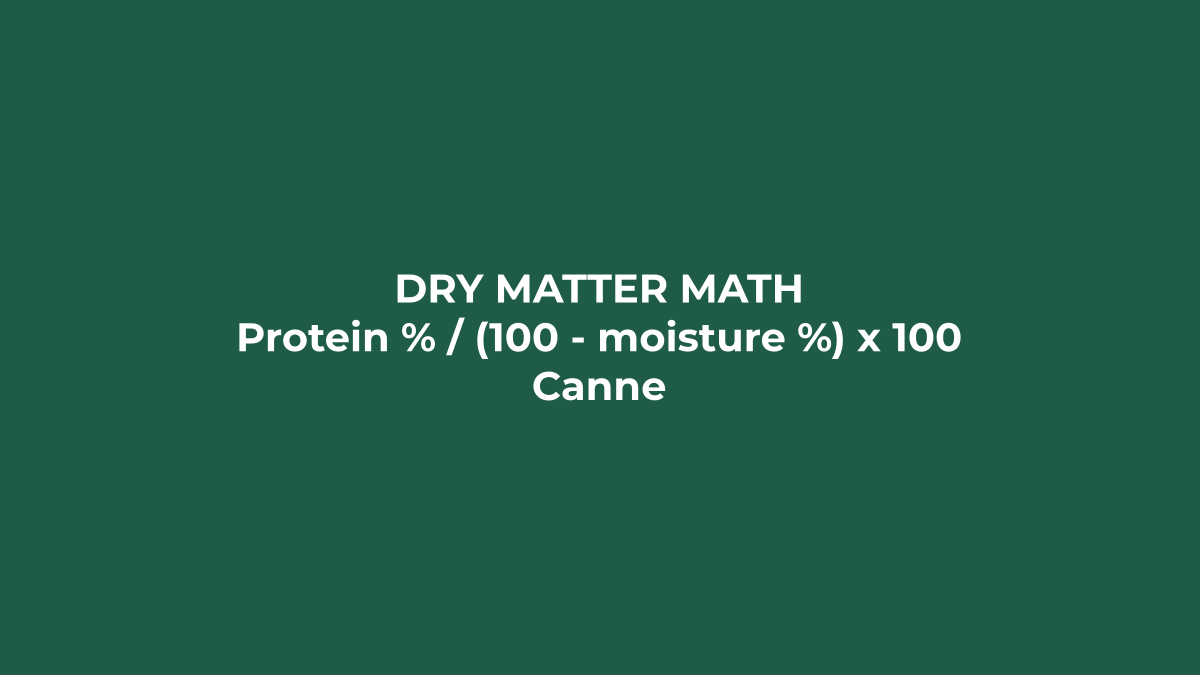
The guaranteed analysis lists protein, fat, fiber and moisture “as fed,” water included. The FDA explains that to compare canned and dry foods, you first convert to a dry matter basis. Here is how:
- Subtract the moisture percentage from 100. That is the dry matter percentage.
- Divide the nutrient percentage by the dry matter percentage.
- Multiply by 100.
Take a canned food listing 11 percent protein and 78 percent moisture. Its dry matter is 22 percent, so its protein on a dry matter basis is 11 ÷ 22 × 100 = 50 percent. A dry food listing 30 percent protein and 10 percent moisture works out to 30 ÷ 90 × 100 = about 33 percent. On the shelf, the dry food looked higher in protein. After the math, the canned food is higher.
For reference, the FDA notes that AAFCO’s minimum crude protein for adult cat maintenance is 26 percent on a dry matter basis. Tufts University’s veterinary nutrition team adds a caution: guaranteed analysis numbers are minimums and maximums, not exact amounts, so even dry matter comparisons are approximate.
Step 4: Read the calorie statement
Calorie content per cup or can is the number that matters most for portion control. The World Small Animal Veterinary Association (WSAVA) notes this information is required on labels in the US; if it is missing elsewhere, the maker should provide it.
Step 5: Ask about the company
WSAVA’s guidelines suggest asking pet food makers who formulates their diets, what quality checks they run and what research they have done. Companies with qualified nutrition staff should be able to answer. If a brand will not share this information, WSAVA advises caution. This applies equally to wet and dry foods. For more on choosing a brand, see how to choose healthy food for your cat.
How to store wet and dry food safely
Opened wet food must go in the refrigerator and be used within a few days, while dry food should be kept cool, dry and sealed. Getting storage wrong can spoil food and make cats sick.
Sources agree on the basics but differ on exact times, so the table gives the ranges we found. When a product label gives its own instructions, follow those.
| Situation | Guidance | Source notes |
|---|---|---|
| Unopened cans and bags | Store indoors, ideally below 80°F, in low humidity | Tufts, Purina |
| Opened wet food in the bowl | Remove after 1 to 4 hours at room temperature | Kinship and PetMD say up to 4 hours; others advise 1 to 2 |
| Opened wet food in the fridge | Cover and use within about 3 days | Tufts and PetMD say discard after 72 hours; some makers allow longer |
| Opened dry food | Keep sealed, cool and dry; check the expiration date | Cornell |
| Dry food in the bowl | Refresh at least daily; wash bowls regularly | PetMD |
Dry food storage tips
- Cornell warns that long storage reduces vitamin potency and lets fats turn rancid, so buy bag sizes you will finish.
- Many makers suggest keeping kibble in its original bag, then placing the whole bag inside an airtight bin. The bag keeps the lot number handy in case of a recall.
- Avoid humid spots like garages. Tufts notes that storage mites in pet food can trigger allergy-like signs.
Wet food storage tips
- Cover leftovers and refrigerate them right away.
- Many cats dislike cold food. Let a refrigerated portion sit for a few minutes, or warm it gently, before serving.
- Don’t freeze unopened cans; Tufts says freezing can affect taste, texture and nutrition.
- Wash wet food bowls after every meal.
How to switch from dry to wet food (or the other way)
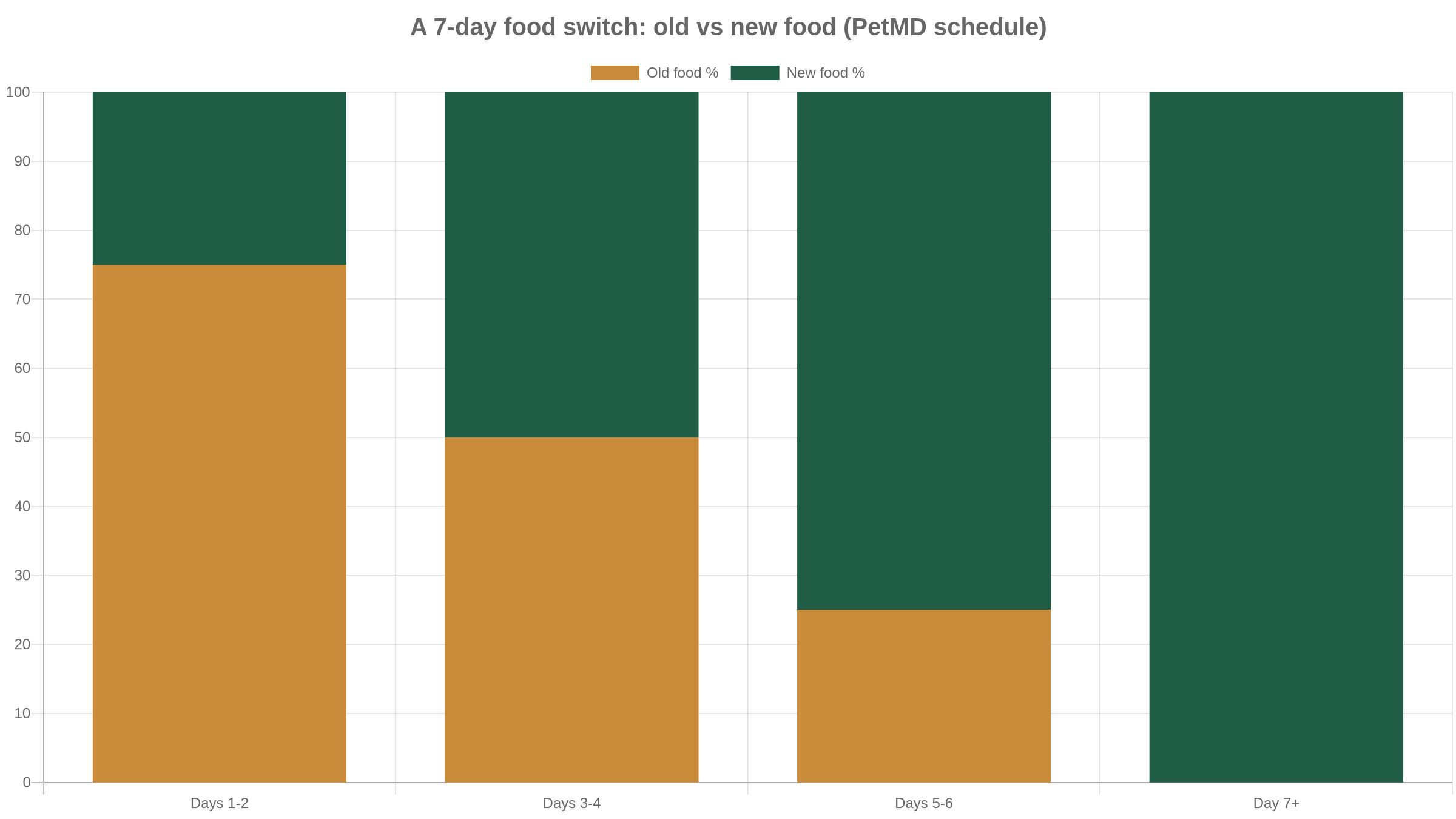
Change food gradually over about 7 to 10 days by mixing more of the new food into the old food every couple of days. A sudden switch can cause vomiting, diarrhea or a cat that refuses to eat.
| Days | Old food | New food |
|---|---|---|
| Days 1–2 | 75% | 25% |
| Days 3–4 | 50% | 50% |
| Days 5–6 | 25% | 75% |
| Day 7 onward | 0% | 100% |
Tips for moving a kibble lover to wet food
- Start with a teaspoon of wet food beside or on top of the usual kibble.
- Try a few textures: pâté, shreds and chunks in gravy all feel different to a cat.
- Serve wet food at room temperature or slightly warm to boost its smell.
- Adjust portions for calories. PetMD reminds owners that dry food is more calorie-dense, so a straight cup-for-cup swap does not work.
- If your cat flatly refuses wet food, Cat Watch suggests asking your vet about adding water to the kibble instead.
Never starve a cat into eating
Some owners try to “wait out” a picky cat. With cats, that is risky. Cornell warns that a cat refusing food can develop serious medical problems. If your cat is not eating during a switch, go back to the old food and call your vet. Avoid swapping in dog food as a stopgap for more than a meal; our quick answer on whether cats can eat dog food explains why it falls short.
When to call the vet
Call your vet before a planned diet change if your cat has any health condition, and call promptly if you see eating, drinking or urinary changes. Some signs are emergencies.
Go to a vet or emergency clinic right away if:
- Your cat strains in the litter box and passes little or no urine. This can mean a urinary blockage, which is life-threatening, especially in male cats.
- Your cat has not eaten for a day or more, or is weak and hiding.
- There is repeated vomiting or diarrhea, or blood in either.
Book a visit soon if:
- Your cat is drinking or urinating much more than usual.
- You notice weight gain or loss without a change in diet.
- Your cat chews on one side, drops food or paws at its mouth.
- Upset stomach lasts more than a day or two during a food switch.
- Your cat has kidney disease, diabetes or urinary problems and you want to change foods.
Keeping an eye on the litter box helps you catch problems early. Daily scooping lets you notice changes in clump size and number; see how often to clean a cat litter box. For a broader checklist, read 20 signs that your cat may be sick.
How we researched this guide
This guide is based on published veterinary and university sources, regulatory guidance and peer-reviewed research listed in the Sources box below. We did not run feeding tests or try any products. We do not recommend specific brands here, and figures such as moisture levels and storage times are ranges reported by those sources.
Frequently asked questions
Is wet food or dry food better for cats?
Neither is better for every cat. A complete and balanced food that your cat eats well is the foundation. Wet food has the edge for hydration and for cats with urinary or kidney issues, while dry food wins on cost and convenience.
Can a cat live on dry food only?
Many healthy cats do, as long as the food is complete and balanced and fresh water is always available. Cats on kibble alone take in less total water, so watch weight and litter box habits, and talk to your vet if your cat has urinary or kidney concerns.
Can a cat eat only wet food?
Yes, if the wet food is labeled complete and balanced for your cat’s life stage. Check that “gourmet” cans are not labeled for supplemental feeding only. Keep up with dental care, since wet food does not clean teeth.
How much wet food equals a cup of dry food?
It depends on the products, so use each label’s calorie statement. As a rough guide from Preventive Vet, about one-third of a cup of dry food holds as many calories as a cup of wet food.
Is grain-free food better?
Grain-free is a marketing claim, not a measure of quality. What counts is the AAFCO statement, the overall nutrient balance and the company behind the food. Ask your vet if you suspect a true food allergy.
Should I add water to dry cat food?
It can raise water intake for cats that refuse canned food, and some vets recommend it. Soaked kibble spoils faster than dry kibble, so treat it like wet food and remove leftovers within a few hours.
Does dry food cause urinary problems?
Dry food does not directly cause urinary disease, and many cats eat it for life without trouble. However, lower water intake can lead to more concentrated urine, which is one risk factor for crystals and stones. Obesity and stress also play a part.
Can I leave dry food out all day?
You can, but it often leads to overeating. The AAFP recommends several measured small meals a day, ideally using puzzle feeders, instead of one bowl that never empties.
Quick answers
- Can cats eat tuna? A little plain canned tuna as an occasional treat is fine, but never as a daily food.
- Why is my cat drinking so much water? A sudden rise in thirst can signal kidney disease, diabetes or thyroid problems.
- Can you feed kitten food to an adult cat? Now and then is fine, but its extra calories can cause weight gain long term.
- Can cats eat dog food? Not as a regular diet; it lacks nutrients cats need.
- What human foods are safe for your cat? A few plain foods are fine in small amounts; many are not.
- How often should you clean a cat litter box? Scoop at least daily and wash the box about weekly.
Sources
- Feeding Your Cat, Cornell Feline Health Center
- “Complete and Balanced” Pet Food, U.S. Food and Drug Administration
- Dog and Cat Foods, MSD Veterinary Manual
- Wet Cat Food vs. Dry Cat Food: Which Is Better?, PetMD
- How To Switch Cat Food, PetMD
- How To Store Cat Food, PetMD
- Pet food storage, Petfoodology, Tufts Cummings School of Veterinary Medicine
- Cats, Nutrition, and Periodontal Disease, VCA Animal Hospitals
- Myths in cat nutrition, Royal Canin Academy
- Wet pet food, Royal Canin Academy
- What is the Best Cat Food for Urinary Health?, Royal Canin
- Hot Literature: Does wet food equal slimmer cats?, dvm360
- Evaluation of calorie density and feeding directions for weight-loss diets, JAVMA (PubMed)
- Feline Feeding Programs consensus statement, AAFP / Journal of Feline Medicine and Surgery
- Guidelines on Selecting Pet Foods, WSAVA Global Nutrition Committee
- Obesity in Pets monograph, Purina Institute
- Must I Feed Wet Food?, Cat Watch (Cornell)
- Is Wet or Dry Food Better for Cats?, Preventive Vet
- How Long Can Wet Cat Food Sit Out?, Kinship
- Cat Food Storage: How to Store Cat Food, Purina
- Wet vs. Dry Cat Food: Which Is the Best Option?, PureWow (via AOL)
This article is general information and is not a substitute for advice from your veterinarian.