

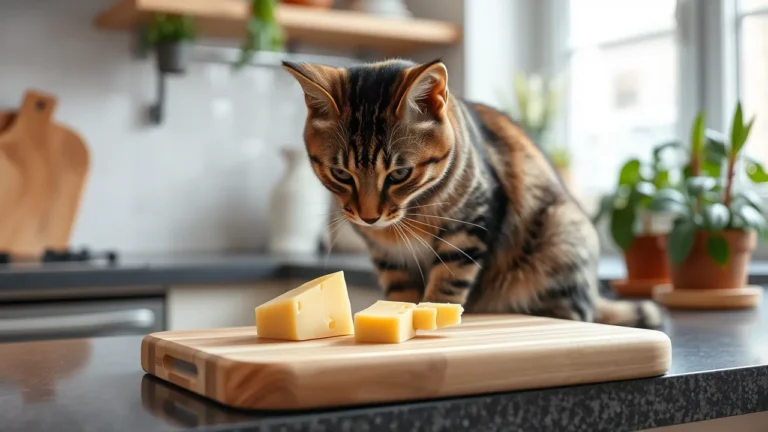
Yes, most cats can eat a tiny piece of plain cheese without harm, but it is not a good regular treat. Many adult cats cannot digest lactose well, so even a small amount can upset their stomach, and some cats should skip dairy completely.
Key takeaways
- Cheese is not poisonous to cats, but it adds nothing they need.
- Many cats lose much of their ability to digest lactose after kittenhood.
- Signs of a bad reaction include diarrhea, gas, nausea and vomiting.
- Treats of any kind should make up only a small share of daily calories.
- If your cat gets sick after dairy, stop giving it and talk to your vet.
Why can’t many cats handle cheese?
The problem is lactose, the natural sugar in milk. To digest it, the body needs an enzyme called lactase. Kittens make plenty of it while they nurse, but most cats make less and less as they grow up. Experts at the Cornell Feline Health Center explain that this loss is a normal part of growing up.
When lactose is not broken down, it stays in the gut. There it pulls in extra water, and gut bacteria ferment it. The result can be loose stool, gas, nausea and sometimes vomiting. Veterinary nutritionists quoted by WebMD say diarrhea is the most common sign and usually shows up within 8 to 12 hours.
Is some cheese safer than milk?
Sometimes. Not every cat is lactose intolerant, and some handle a little dairy with no trouble. Cultured dairy foods such as cheese and yogurt are less likely to cause a reaction than plain milk, according to experts quoted by WebMD. That does not make cheese healthy. It only means a tiny taste is less likely to cause problems than a saucer of milk.
| Dairy item | What to know |
|---|---|
| Cow’s milk | High in lactose and fairly high in calories. A common cause of stomach upset in adult cats. |
| Plain cheese | Less likely than milk to cause a reaction, but calorie dense. A tiny bite at most, and only now and then. |
| Plain yogurt | Also cultured, so often easier on the stomach than milk. Still optional, not needed. |
| Kitten milk replacer | Made for young kittens who still need milk. Cow’s milk is not a substitute. |
How much cheese can a cat have?
Very little. Cats are meat eaters, and their main food should already give them everything they need. Hill’s Pet Nutrition advises that treats and foods not recommended by your vet should stay under about 8 to 10 percent of a cat’s daily calories. Cheese is rich, so even a small cube can use up much of that budget. Weight gain is a real worry too: Cornell notes that obesity is a major health problem in cats.
If you want to share a snack, a pea-sized piece of plain, hard cheese once in a while is the most you should offer. Watch your cat for the next day. If you see any stomach trouble, leave dairy off the menu for good. For other options, see our guide to human foods that are safe for cats and our answer on whether cats can eat tuna.
When should you call the vet?
Call your vet if your cat has vomiting or diarrhea that does not settle down, or seems unwell in any other way after eating dairy. Hill’s recommends booking a check-up when a cat shows these or other unusual signs. Also ask your vet before giving dairy to a cat with a health condition or a special diet. Ongoing tummy upsets can have many causes, and a vet can help sort out whether food is to blame.
Frequently asked questions
Are all cats lactose intolerant?
No. Many adult cats are, but some cats tolerate small amounts of dairy with no signs at all. You can’t tell in advance, which is why tiny portions are safest.
Can kittens eat cheese?
Kittens do not need cheese or cow’s milk. A kitten that still needs milk should get a milk replacer made for kittens, and weaned kittens should eat a complete kitten food.
Why does my cat love cheese so much?
Cheese is rich in fat and protein, which many cats find tasty. Liking a food doesn’t mean it’s good for them, so keep it rare. Our wet vs dry cat food guide covers what should fill the bowl instead.
Sources
- Should They Regularly Feed Their Adult Cat Cow’s Milk?, CatWatch (Cornell Feline Health Center)
- Cats and Dairy: Get the Facts, WebMD
- Can Cats Eat Cheese?, Hill’s Pet Nutrition
This article is general information and is not a substitute for advice from your veterinarian.